
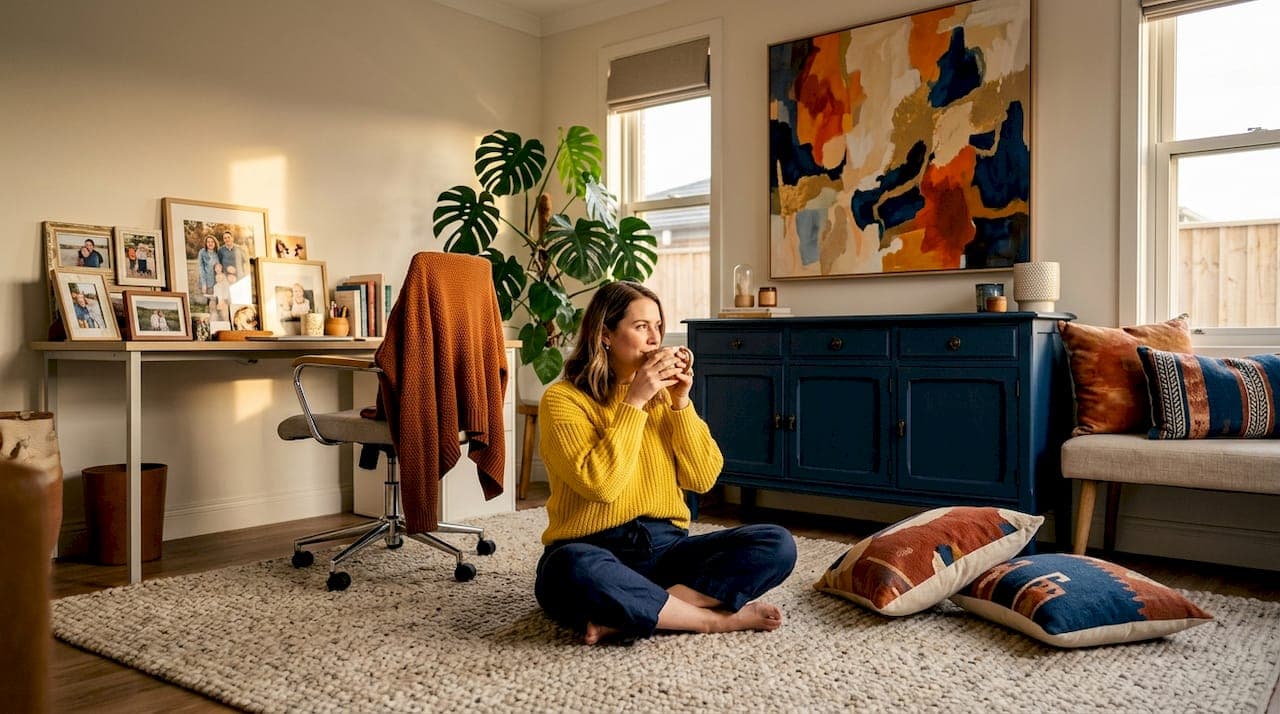
Art does far more than fill empty walls. The role of art in home sanctuary creation is one of the most underestimated forces in interior design, and the science behind it is genuinely surprising. A carefully chosen painting can lower your stress hormones, quiet an overactive mind, and transform an ordinary room into a space that genuinely restores you. This guide covers the research, the design principles, and the practical steps you need to make art work for your wellbeing, not just your walls.
Table of Contents
- Key takeaways
- The role of art in home sanctuary: what science says
- Design principles for a restoring art sanctuary
- Art as a sanctuary: the emotional foundation
- Creating a personal art sanctuary: practical steps
- Art types and placement by room
- My perspective on art and the spaces we live in
- Bring your sanctuary to life with Weareuncommon
- FAQ
Key takeaways
| Point | Details |
|---|---|
| Art reduces stress physically | Engaging with art lowers cortisol and calms the nervous system, not just the mood. |
| Personal meaning matters most | Art that connects to your identity or memories creates deeper emotional safety than purely decorative pieces. |
| Placement shapes the experience | Hanging height, room function, and lighting all affect how art makes you feel in a space. |
| Nature-inspired art restores | Biophilic artwork has measurable effects on burnout reduction and mental wellbeing. |
| Start small and build slowly | One meaningful piece placed thoughtfully outperforms a wall full of art chosen for aesthetics alone. |
The role of art in home sanctuary: what science says
Most people assume art is decorative. Something to fill a gap above the sofa or tie the room together. But the physiological evidence tells a different story entirely.
Art-making for 45 minutes or more significantly lowers cortisol levels, the hormone most directly linked to chronic stress. This holds true regardless of whether you have any artistic skill or prior experience. Simply engaging with art, whether creating or viewing it, triggers a measurable shift in your body's stress response.
"Art gently invites attention and creates grounding micro-moments of mindfulness amid daily distractions." — Seattle Art Source
The neurological explanation is equally compelling. When you spend time with a piece of art you find meaningful, your parasympathetic nervous system activates. This is the branch of your nervous system responsible for rest and recovery, the opposite of the fight-or-flight state most of us spend far too long in. Art lowers amygdala hyperreactivity, the brain region that drives anxiety responses, through consistent, gentle engagement.
Nature-inspired art takes this further. Biophilic design reduces burnout and improves mental health at remarkably low cost in home settings, according to 2026 environmental psychology research. A painting of a forest, a coastline, or even an abstract piece using organic shapes and earthy tones can rewire your emotional and cognitive responses over time. This is not merely aesthetic preference. It is biology.
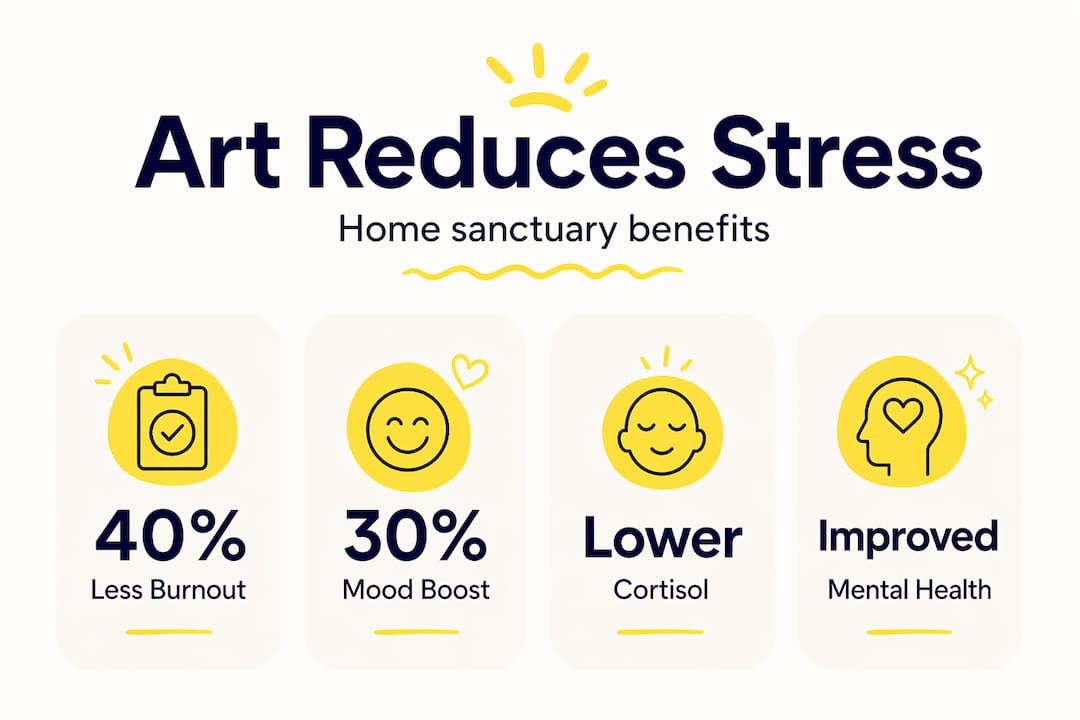
The importance of art in home environments, then, is not about taste. It is about creating the physiological conditions for genuine rest.
Design principles for a restoring art sanctuary
Knowing that art benefits your wellbeing is one thing. Knowing how to hang it, choose it, and care for it is another. These principles make the difference between a home that feels calm and one that simply looks nice.
Choosing art that resonates personally
The single most important factor is emotional resonance. Art that connects to your memories, values, or sense of beauty works harder for your wellbeing than art chosen because it matched the cushions. When selecting pieces for your home, ask yourself how the work makes you feel, not just how it looks.
Colour and emotional safety
Colour has a direct effect on mood. Earth tones, muted blues, sage greens, and warm neutrals signal safety to the nervous system. These are not rules to follow rigidly, but they are worth considering when you are building a space intended for restoration. Bright, high-contrast palettes energise. Softer, balanced hues calm.
Getting the height right
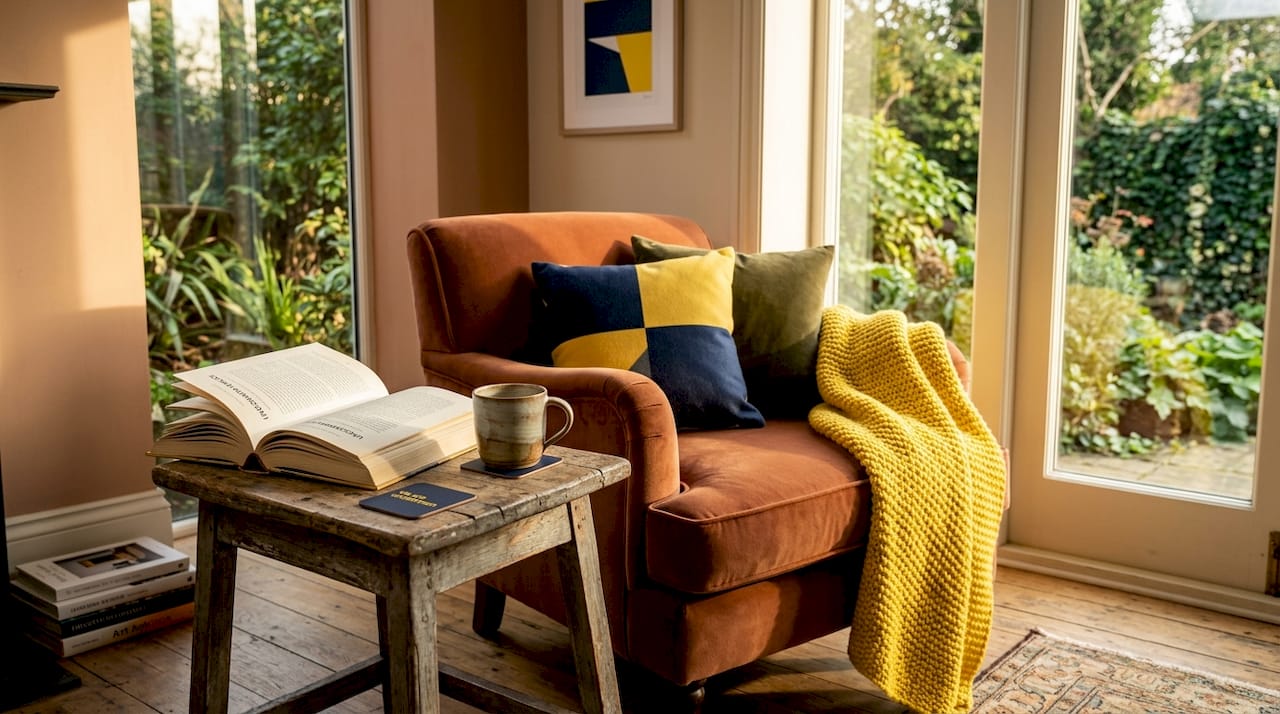
Incorrect hanging height disrupts visual comfort. Art hung too high feels disconnected from the room and from you. In seated areas like living rooms, hanging art slightly lower than standard eye level creates a sense of intimacy and connection. In hallways and standing spaces, eye level works well.
Unifying an eclectic collection
If you love mixing styles and periods, consistent framing is your best tool. Matching frames unify diverse artworks and prevent a collection from feeling chaotic. A calm, cohesive gallery wall uses the same frame colour or material throughout, even when the artworks themselves are wildly different.
- Choose art based on emotional response first, aesthetics second
- Use earth tones and muted palettes in rooms intended for rest
- Hang art lower in seated spaces for visual connection
- Unify mixed collections with consistent framing
- Keep art away from direct sunlight to prevent fading
Pro Tip: Direct sunlight causes irreversible fading on original paintings. Position your art away from south-facing windows or use UV-filtering glass to protect the work long term.
Art as a sanctuary: the emotional foundation
The benefits of art in home spaces go beyond the visual. Art carries meaning. It tells stories. And when those stories are yours, the effect on your sense of safety and belonging is profound.
A home sanctuary is rooted in emotional safety, signalled by personally meaningful objects including heirlooms, photographs, and art that carries personal history. When you walk past a painting that reminds you of a place you love, or a person who shaped you, your nervous system registers that signal. It grounds you.
This is why a print from a high street shop rarely creates the same feeling as an original work. The difference is not snobbery. It is meaning. Original art, especially art made to reflect your choices of colour, subject, and scale, communicates something about who you are. That communication is what transforms a house into a sanctuary.
Practising what some call "slow looking" deepens this connection further. Rather than glancing at your art as you pass, try sitting with a piece for five minutes. Notice the brushwork, the light, the decisions the artist made. Art incorporated into daily living offers effortless mindfulness when you give it your attention.
The benefits of this practice include:
- Reduced mental chatter and a quieter, more present state of mind
- Stronger emotional connection to your space and the objects in it
- A natural break from screens and digital stimulation
- Increased appreciation for craft, texture, and colour over time
Creating a personal art sanctuary: practical steps
You do not need a large budget or an existing art collection to begin. Creating a personal art sanctuary is a gradual, personal process. These steps give you a clear place to start.
- Begin with one meaningful piece. Choose something that genuinely moves you rather than something you think you should like. Place it somewhere you spend real time, not a guest room or corridor.
- Layer in biophilic artwork. Once your first piece is settled, add something nature-inspired. A coastal scene, a botanical study, or an abstract work using organic forms all bring the restorative qualities of the natural world indoors.
- Create a screen-free zone. Designate one area of your home, even a single armchair and the wall behind it, as a space defined by art rather than technology. This becomes your anchor point for daily stillness.
- Revisit your choices regularly. Your emotional needs change. A piece that felt right two years ago may no longer serve you. Treat your art collection as a living reflection of where you are, not a permanent fixture.
- Invest in quality over quantity. One gallery-quality original painting will do more for your home sanctuary than ten prints. The depth and texture of an artist's hand is visible and felt in a way that reproduction cannot replicate.
Pro Tip: When you are unsure where to start, choose a colour palette you already find calming in your home and look for art that works within it. This makes the selection process feel manageable rather than overwhelming.
Art types and placement by room
Different rooms serve different emotional functions. The art you choose for each space should reflect that.
| Room | Best art type | Placement advice | Key benefit |
|---|---|---|---|
| Living room | Abstract or nature-inspired | Slightly below eye level when seated | Promotes conversation and calm |
| Bedroom | Soft, personal, or minimal | Directly facing the bed | Supports rest and emotional safety |
| Home workspace | Motivating or nature scenes | At standing eye level | Reduces fatigue, aids focus |
| Calm corner | Personal or sentimental pieces | Close and intimate, low on the wall | Deepens mindfulness and grounding |
| Hallway | Bold or photographic works | Standard eye level | Creates positive first impressions |
Abstract art works particularly well in living rooms because it invites interpretation without demanding attention. Nature-inspired work is effective in almost any room, given its measurable effects on burnout reduction. Personal and sentimental pieces belong in the spaces where you are most vulnerable, the bedroom and your quiet corner, because that is where emotional safety matters most.
Scale matters too. A small painting on a large wall creates visual anxiety. A large painting in a small room can overwhelm. Aim for art that feels proportionate to its wall and its room, and do not be afraid to commission a piece in a specific size to suit your space exactly.
My perspective on art and the spaces we live in
I have spent years thinking about how art functions in the home, and the honest truth is that most of us underestimate it completely.
We treat art as the last decision. The thing we add once the furniture is sorted and the paint is dry. But in my experience, that approach produces rooms that look finished without ever feeling like sanctuaries. The art is there, but it is not doing anything.
What I have learned is that the pieces that genuinely change how a room feels are always the ones with personal weight. Not the most expensive. Not the most technically impressive. The ones that mean something to the person who lives there. I have seen a single painting of a coastline transform a bedroom into a place someone actually wanted to spend time in. Not because it was beautiful, though it was. Because it reminded them of somewhere they felt safe.
The other thing I would say is this: creating a sanctuary through art is not a project you complete. It is something you tend to. Your needs shift, your tastes evolve, and the art that serves you should shift too. The homes I find most restorative are never the ones that look like a finished magazine shoot. They are the ones that feel like they are still being lived in and loved.
— Matt
Bring your sanctuary to life with Weareuncommon
If this article has made you think differently about the art on your walls, or the walls that are still empty, Weareuncommon is a natural next step.
We hand paint every piece to order. You choose the design, the colours, and the size, and our team of artists creates your painting from scratch. No prints. No mass production. Just original, gallery-quality work made specifically for your space. Whether you are looking for a nature-inspired piece for your bedroom or a bold abstract for your living room, you will find something worth living with. Browse the full collection at our hand painted art shop and find the piece that makes your home feel like yours.
FAQ
Does art really reduce stress at home?
Yes. Art-making lowers cortisol and viewing meaningful art activates the parasympathetic nervous system, producing measurable physiological calm. This effect occurs regardless of artistic experience or skill.
What type of art is best for a home sanctuary?
Nature-inspired and personally meaningful art tends to work best. Biophilic artwork reduces burnout and promotes mental wellbeing, while personal pieces create emotional safety and a sense of belonging in your space.
Where should I hang art for maximum calming effect?
In seated areas like living rooms and bedrooms, hang art slightly below standard eye level to create a sense of intimacy and visual connection. Avoid placing art in direct sunlight to protect both the work and its long-term impact.
Do I need original paintings or will prints work?
Original paintings carry depth, texture, and the physical evidence of an artist's hand that prints cannot replicate. For a genuine sanctuary, original work creates a stronger emotional and sensory response than reproduction.
How do I start creating a personal art sanctuary?
Begin with one piece that genuinely moves you, place it somewhere you spend real time, and build slowly from there. Prioritise emotional resonance over aesthetics, and treat your collection as something that evolves with you.