
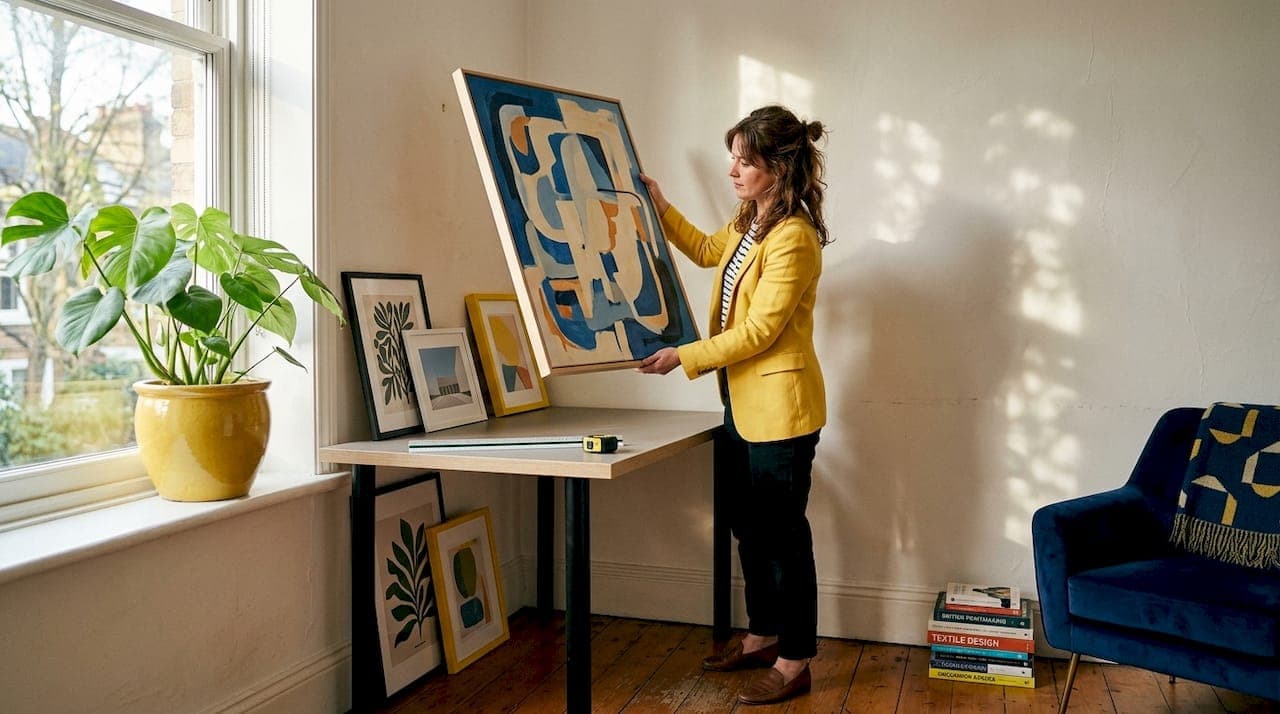
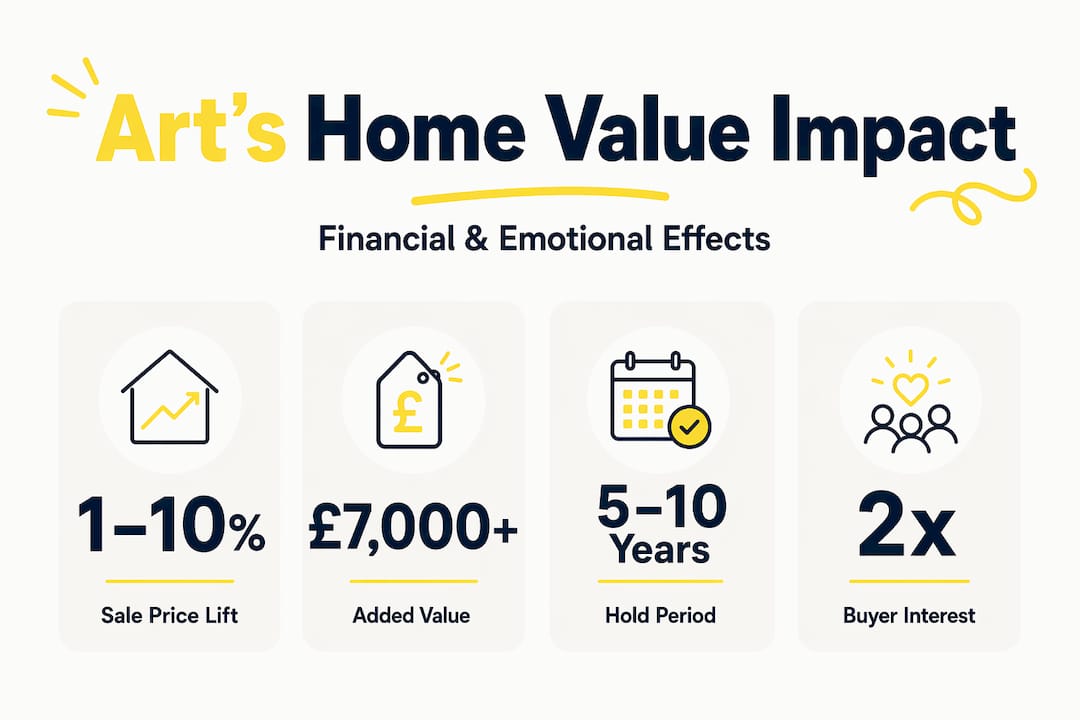
Art has quietly become one of the most compelling ways to improve a home. Not just visually, but financially. Treating art as investment for home means you get something beautiful on your walls and a potential uplift in property value at the same time. Well-chosen art can add an average of £7,000 to homes valued at £450,000 and above. That is not a small number. This guide walks you through the financial realities, the practical preparation, and the display strategies that make art work harder for your home.
Table of Contents
- Key takeaways
- Art as investment for home: financial and emotional value
- Before you buy: what to consider first
- Choosing and displaying art to maximise value
- Maintaining and protecting your investment
- Measuring the financial impact on your home
- My honest take on art investment at home
- Start your home art collection with Weareuncommon
- FAQ
Key takeaways
| Point | Details |
|---|---|
| Art adds measurable value | Staged homes featuring curated art sell for 1–10% more than those without. |
| Ongoing costs matter | Budget for insurance, framing, and storage on top of the purchase price. |
| Patience is non-negotiable | Experts recommend holding art for 5–10 years or more to realise appreciation. |
| Authenticity protects value | Provenance research and authentication are indispensable when buying investment-grade pieces. |
| Display affects perception | Professional framing and good lighting directly influence how buyers and valuers perceive your art. |
Art as investment for home: financial and emotional value
Most people think of art as decoration. The smarter view is that it is a dual-purpose asset. It improves how your home looks and feels every day, while also sitting quietly in the background as a long-term store of value.
The financial case is real, but it requires context. Art provides portfolio diversification and emotional dividends that other asset classes simply cannot offer. Unlike shares, art does not flash red numbers at you during a market correction. You live with it. You enjoy it. And if you have chosen well, it appreciates over time.
That said, the returns are not guaranteed and they are rarely quick. Experts consistently advise holding art for 5–10 years or longer before expecting meaningful appreciation. Short-term flipping is a game for specialists, not homeowners.
There is also an interesting argument around illiquidity. Because you cannot sell a painting in seconds the way you can sell a stock, art's illiquidity acts as a behavioural shield that prevents the panic-selling mistakes that erode returns in other markets. Sitting tight is built into the asset class.
The emotional and social value should not be underestimated either. A home filled with considered, original artwork tells a story. It creates atmosphere. It sparks conversation. Decorating with art transforms a house into a home, adding lifestyle value that buyers subconsciously recognise when they walk through the door.
Key risks to keep in mind:
- Art markets are opaque and illiquid, making price discovery difficult
- Condition problems can destroy value rapidly
- Taste-driven demand means even quality pieces can fall out of favour
- Buyer's premiums and seller commissions often amount to 12–25% in transaction fees, which eats into returns
"Art investment blends financial returns with emotional and social value for most homeowners, rather than purely monetary gains." — Bautis Financial
Before you buy: what to consider first
Preparation separates homeowners who build a genuine home art collection from those who end up with expensive regrets. There are several things to sort out before you spend a penny.
Setting a realistic budget
The purchase price is only part of the cost. Insurance runs at 0.5–2% of artwork value annually, professional framing costs between £400 and £800 per piece, and private storage (if needed) adds £100–£400 per month. These are not optional extras for investment-grade work. They are the cost of protecting your asset.
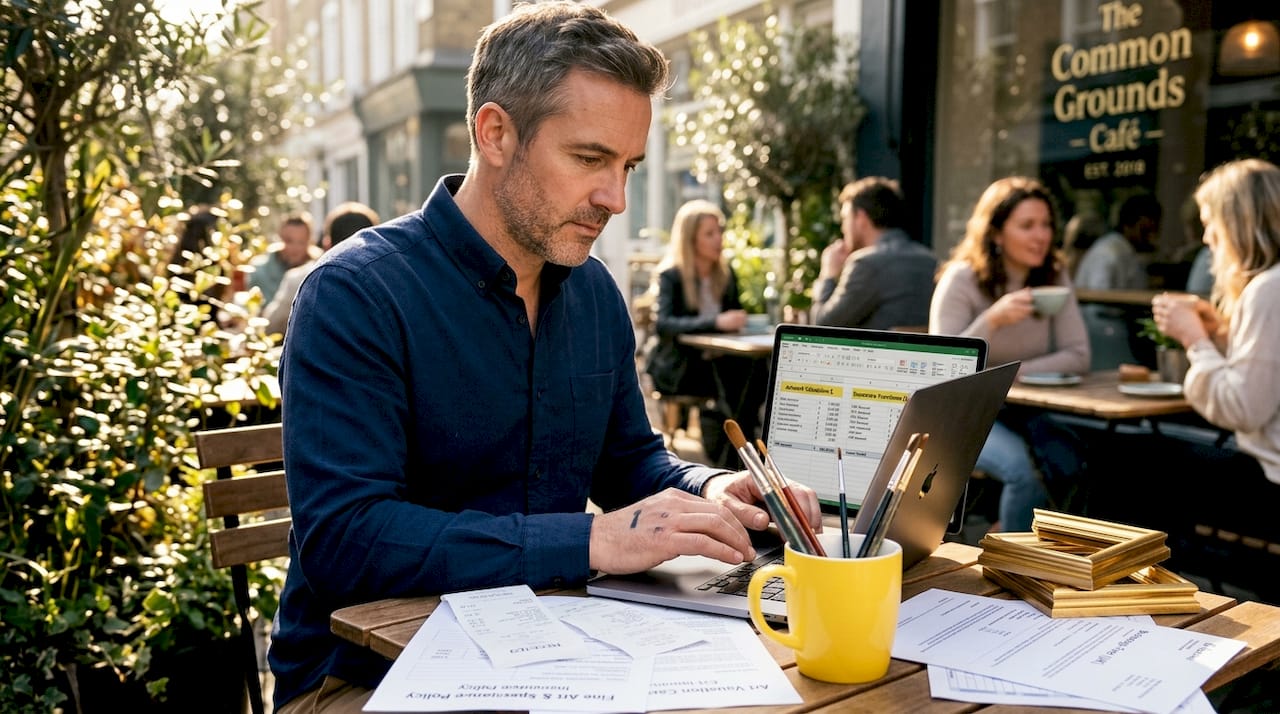
Authentication and provenance research typically cost £500–£3,000 but are indispensable for maintaining value. Skipping this step when buying art at auction or from private sellers is a genuine risk.
Insurance: do not rely on your home policy
Standard homeowners insurance often excludes or severely limits cover for fine art. Specialist fine art insurance covers theft, accidental damage, and transit losses in ways that standard policies do not. If you are building a collection with real value, a dedicated policy is not a luxury. It is a necessity.
Where to buy
| Source | Advantages | Considerations |
|---|---|---|
| Established galleries | Provenance and authentication provided | Higher prices, less negotiation room |
| Reputable auction houses | Competitive pricing, transparency | Buyer's premiums of 12–25% apply |
| Online platforms | Wide selection, accessible price points | Harder to verify condition and provenance |
| Direct from artists | Original work, fair pricing | Less established resale market |
Pro Tip: When buying art for home investment purposes, always request a certificate of authenticity and a full provenance record. Without these, resale value is significantly harder to defend.
Choosing and displaying art to maximise value
Selecting art that works both aesthetically and as an investment is a skill. The good news is that the principles are straightforward once you understand them.
-
Choose original works over prints. Original paintings carry far greater investment potential. A hand-painted piece has texture, depth, and uniqueness that a print simply cannot replicate. When buyers walk into a home and see original work, the perception of quality shifts immediately.
-
Match colours and themes to the space. Art that clashes with its surroundings undermines both the room and the piece itself. Think about the dominant colours in each room and choose works that complement rather than compete. Neutral spaces give art room to breathe. Bold interiors need considered choices.
-
Balance personal taste with broader appeal. You need to love what you buy. But if property value is part of your goal, avoid pieces that are so niche or challenging that they alienate most buyers. Abstract work with a considered palette tends to perform well across different tastes.
-
Invest in professional framing. Non-archival framing can reduce artwork value by 20% within five years due to fading and physical damage. Archival-quality framing with UV-protective glass is the standard for any piece you care about.
-
Use lighting deliberately. Picture lights and directional spotlights do more than illuminate. They signal that the art matters. Buyers notice. Estate agents notice. Good lighting transforms how a piece reads in a room.
-
Consider rotation and staging. If you are preparing to sell, rotate your strongest pieces into the most visible rooms. The entrance hall, living room, and principal bedroom are where first impressions form. Art placed thoughtfully in these spaces shapes the entire viewing experience.
Pro Tip: When staging a home for sale, use art to define the purpose of each room. A large, calm abstract in the bedroom signals rest. A bold, energetic piece in the dining room signals life and sociability. Buyers respond to these cues without realising it.
Maintaining and protecting your investment
Buying well is only half the work. Keeping your art in excellent condition is what preserves its value over the years.
The fundamentals of good art care at home:
- Avoid direct sunlight. UV exposure is the single biggest cause of fading and deterioration in unprotected works. Position pieces away from windows or use UV-filtering glass in frames.
- Control humidity and temperature. Fluctuations cause canvas and paper to expand and contract, leading to cracking and warping. Aim for a stable environment of 45–55% relative humidity and temperatures between 18–22°C.
- Inspect regularly. Check for signs of flaking paint, foxing on paper works, or frame damage at least twice a year. Catching problems early is far cheaper than restoration later.
- Use professional conservators. Never attempt to clean or repair a valuable piece yourself. A qualified conservator can address damage without reducing the work's value or authenticity.
- Update your insurance appraisal. Art values shift. An appraisal that is five years old may significantly undervalue your collection. Review it every three to five years, or after any major market movement.
"Art investment requires patience, knowledge, and prioritising authenticity and provenance to minimise risk." — Artdealersgaleries.co.uk
Security is also worth addressing directly. A visible alarm system and discreet fixings for larger pieces are sensible precautions. For high-value works, consider a monitored security system and document everything with high-resolution photographs for insurance purposes.
Measuring the financial impact on your home
The question most homeowners eventually ask is: how much does this actually add to my property's value?
The honest answer is that it depends on the quality of the curation, the condition of the works, and the market you are selling into. But the data is encouraging. Staged homes featuring art sell for 1–10% more than comparable unstaged properties. For a £500,000 home, that is a potential uplift of £5,000 to £50,000.
The mechanism is partly psychological. Buyers form emotional impressions within seconds of entering a room. Art signals taste, care, and quality. It makes spaces feel considered rather than generic. Estate agents consistently report that well-curated homes generate more interest and stronger offers.
To document the value of your collection when selling or refinancing, keep records of purchase receipts, certificates of authenticity, appraisal reports, and professional photographs. Present these to your estate agent so they can reference the collection in marketing materials. Some buyers will pay a premium to acquire the art alongside the property.
One important caution: do not overstate the financial case to yourself. Art is not a guaranteed return. It is a long-term asset that rewards patience, knowledge, and genuine love of the work. Treat any property value uplift as a welcome bonus, not a certainty.
My honest take on art investment at home
I have seen homeowners approach art in two very different ways. Some buy with their heart and end up with a collection that genuinely enriches their lives, and occasionally their bank balance too. Others buy with a spreadsheet and end up with pieces they do not connect with, sitting in rooms that feel like showrooms rather than homes.
The financial case for art is real, but it is rarely the whole story. What I have found, consistently, is that the homeowners who build the most valuable collections are the ones who buy what they love and then look after it properly. The investment case follows the quality of the curation, not the other way around.
The most common mistake I see is buying cheap prints and expecting them to perform like original works. They do not. Original, hand-painted pieces carry a presence and authenticity that buyers and valuers respond to. The difference is visible and tangible.
My advice is to start with one or two pieces you genuinely love, care for them properly, and build from there. A long-term mindset transforms art from an expense into an asset. There is no shortcut, but there is a very enjoyable process.
— Matt
Start your home art collection with Weareuncommon
If you are ready to invest in original art that works for your home and your long-term goals, Weareuncommon is a natural starting point.
At Weareuncommon, we hand-paint every piece to order. You choose the design, colours, and size. Our team of artists then creates your painting from scratch. No prints. No reproductions. Just gallery-quality, original work made specifically for your space. Whether you are decorating a single room or building a considered home art collection, we make the process straightforward and personal. Explore the full range at the Weareuncommon shop and find the piece that belongs in your home.
FAQ
Does art genuinely increase home value?
Yes. Curated art can add an average of £7,000 to homes valued at £450,000 and above, and staged homes with art sell for 1–10% more than those without.
How long should I hold art as an investment?
Experts recommend holding art for at least 5–10 years to allow meaningful appreciation, as short-term returns are unpredictable and transaction costs are high.
What is the best art for home investment?
Original, hand-painted works by emerging or mid-career artists with documented provenance tend to offer the strongest combination of aesthetic appeal and investment potential for homeowners.
Do I need specialist insurance for art at home?
Yes. Standard home insurance rarely covers fine art adequately. A specialist policy covering theft, accidental damage, and transit is the appropriate choice for any collection of real value.
How do I choose art for my home without overspending?
Set a clear budget that includes framing, insurance, and authentication costs. Start with one original piece you love, display it well, and build your collection gradually over time.